
This is a Full Guide for Christmas in Oaxaca, Mexico for travelers and Spanish Students , we are going to explore Christmas in Oaxaca Mexico traditions that blend with religious nuances, resulting in unique and colorful festivities. The entire season is marked by a series of events and activities that bring communities and families together in joyful observance. Here’s an overview of how Christmas is celebrated in Oaxaca:
Community and Family Focus

At its heart, Christmas in Oaxaca,Mexico emphasizes family and community. Generosity, hospitality, and shared meals strengthen communal bonds. It’s a time for reconciliation, generosity, and celebrating cultural identity.
Christmas in Oaxaca Mexico traditions
There is not a secret that people from Oaxacaa,Mexico love celebrating,therefore December is not the exeption to the rule, here,we share with you a list of Oaxaca celebrations in December
El Día de la virgen de Juquila– December 8
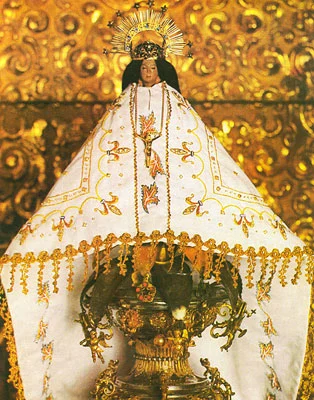
La Virgen de Juquila, or Our Lady of Juquila (Nuestra Señora de Juquila), is one of the most venerated Marian images in Mexico, particularly revered in the state of Oaxaca. She holds significant religious, cultural, and historical importance for millions of devotees both within Mexico and internationally.
El Día de la Virgen de Guadalupe – December 12
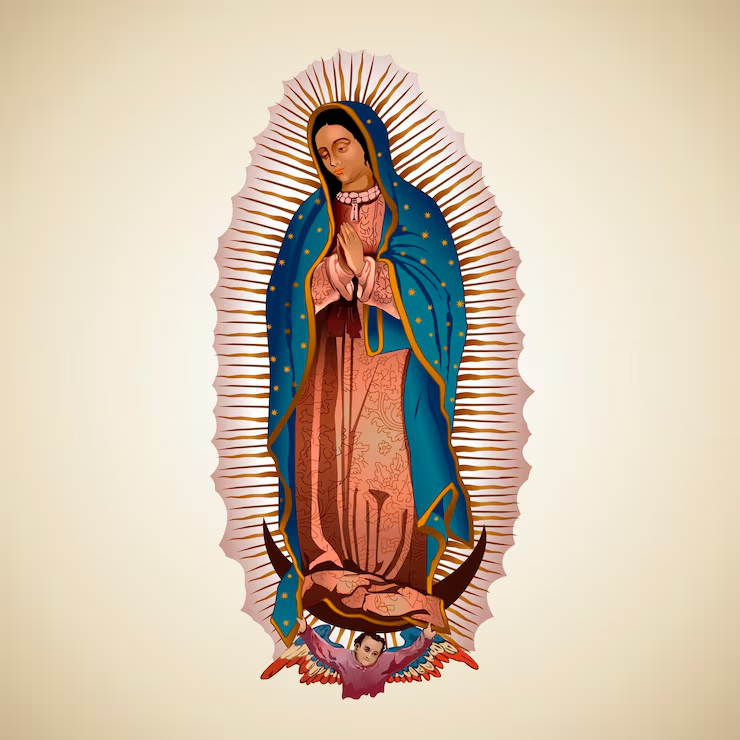
While the primary celebrations occur on December 12th, reverence for the Virgin of Guadalupe is widespread in Oaxaca. Pilgrimages, masses, and community gatherings are common. Shrines and altars dedicated to the Virgin are adorned with offerings, flowers, and candles.
Las Posadas – December 16–24
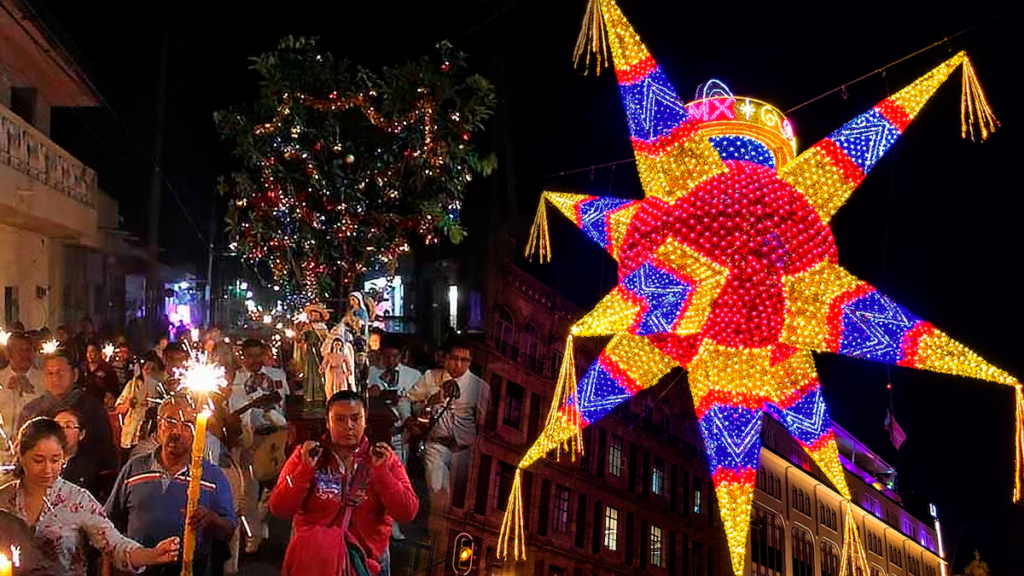
Las Posadas are nightly processions held from December 16th to December 24th, reenacting Mary and Joseph’s search for shelter before the birth of Jesus. Participants, often dressed as Mary, Joseph, angels, and shepherds, move through neighborhoods, singing traditional songs and carrying candles. They visit designated homes, symbolizing inns, where they are initially turned away, only to be welcomed after prayers. These gatherings typically conclude with festive parties featuring music, food, and piñatas, especially for children.
What is the meaning of the piñata in Mexican Christmas?
The meaning of piñatas in Mexican Christmas traditions is rich in religious symbolism. Each of the points on the piñata represents the seven deadly sins. That is why children participate by hitting the piñata with their eyes covered by a bandana. The bandana represents faith—after all, in Mexico people say “la fe es ciega” (“faith is blind”). Last but not least, the stick represents the human will to break away from the seven deadly sins.
La Noche de Rábanos – December 23
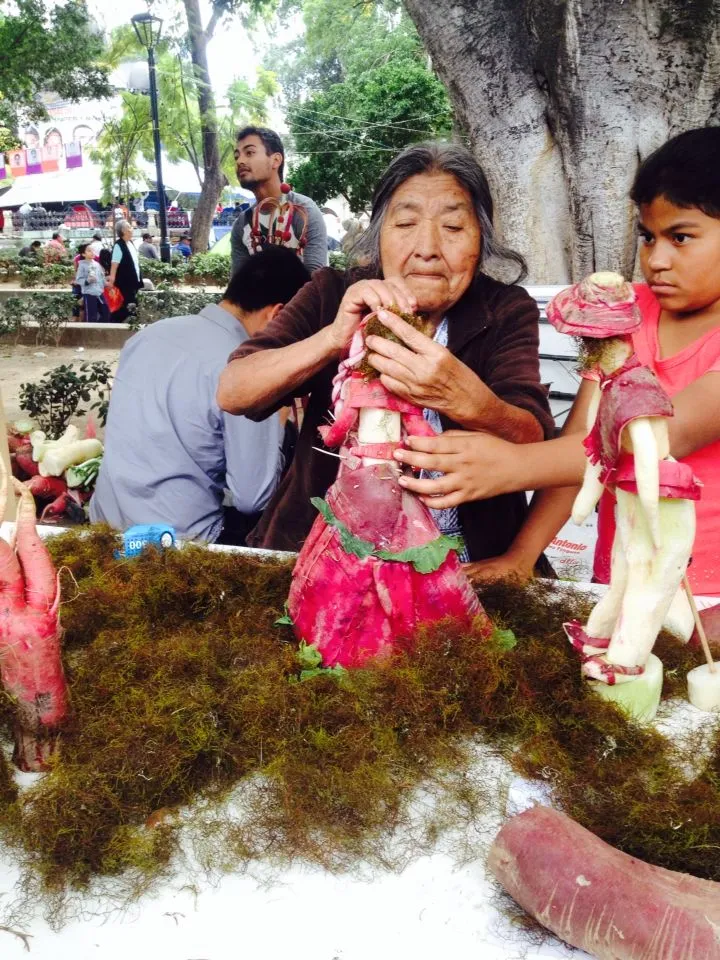
Radish Night, known in Spanish as Noche de Rábanos, is a unique cultural and competitive celebration that blends religious, cultural, and daily life themes. Artisans carve and shape large radishes into intricate sculptures representing nativity scenes, saints, and other traditional motifs. Held in the historic center of Oaxaca at the Zócalo (the main plaza in many Mexican cities), the event draws large crowds of both locals and visitors from around the world.
Nochebuena (Christmas Eve) – December 24
Christmas Eve is a significant religious and family-oriented celebration. Attendees often participate in the “Misa de Gallo” (Midnight Mass) followed by a festive meal. Traditional foods include tamales, bacalao (salted cod), and ponche (a warm fruit punch). It’s a time for families to come together, exchange gifts, and celebrate the birth of Jesus.
El Día de los Santos Inocentes (Day of the Holy Innocents) – December 28
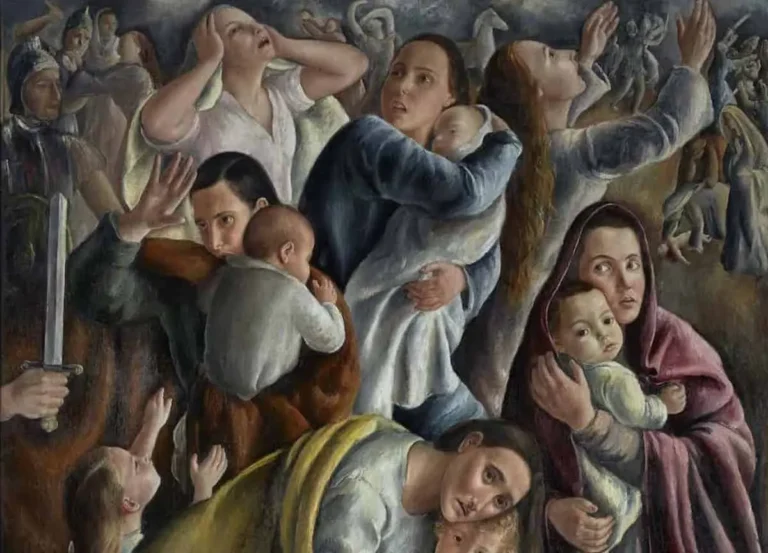
This day commemorates the biblical event of King Herod’s massacre of young children. In Oaxaca, it’s observed with special masses and prayers. Some communities may hold reenactments or processions to remember the innocent lives lost.
El Año Viejo en Oaxaca (The old year-New Year's Eve in Oaxaca)
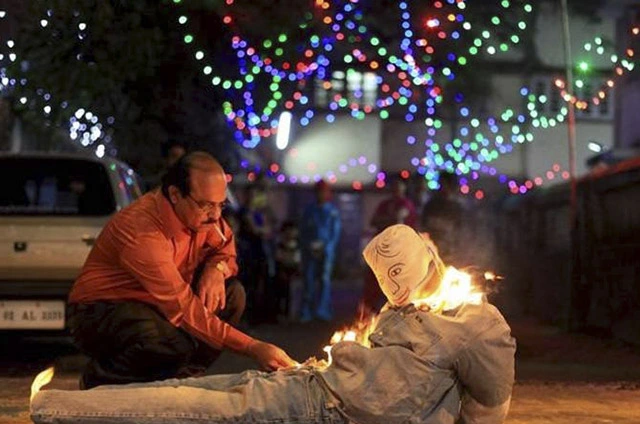
In Oaxaca, there is a very common tradition to make a effigy that represents the past year’s troubles to welcome the new year. It’s a symbolic farewell to the old year, often done with life-sized dolls made from paper, sawdust, and old clothes, sometimes satirizing politicians, burned at midnight on New Year’s Eve.
El Día de Reyes in Oaxaca, Mexico (Epiphany)–January 6
Although Epiphany is celebrated on January 6th, preparations begin in December. Families often create nativity scenes (nacimientos) that include representations of the Three Wise Men(Los tres reyes magos). Religious schools and churches may hold events focusing on giving presents for kids.

Christmas in Oaxaca Mexico food
La Rosca de Reyes
What is the meaning of King Cake in Mexico?
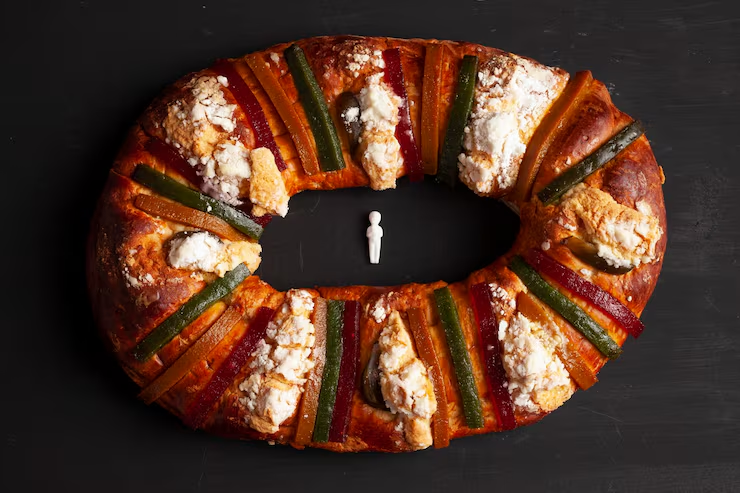
La Rosca de Reyes is a sweet, ring-shaped bread decorated with candied fruits that symbolize the jewels of the Three Wise Men’s crowns. The pastry is typically flavored with orange blossom water and sometimes infused with anise or other spices. Hidden within the dough is a small figurine, usually representing the Baby Jesus. According to tradition, whoever finds the figurine in their slice is expected to host a party on Día de la Candelaria (Candlemas) and that person is going to give tamales for free on February 2nd.
Tamales
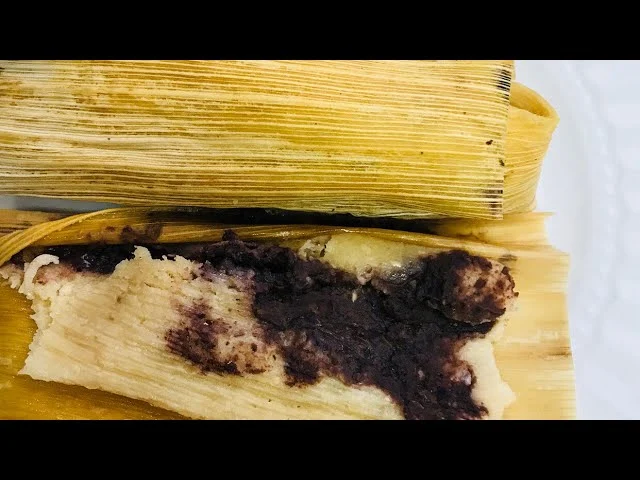
Tamales are one of the most common food options in Oaxaca, especially if you attend a posada. Bean tamales (tamales de frijol) are especially popular among Oaxaqueños during Christmas gatherings and celebrations, particularly in small towns.
Ponche Navideño
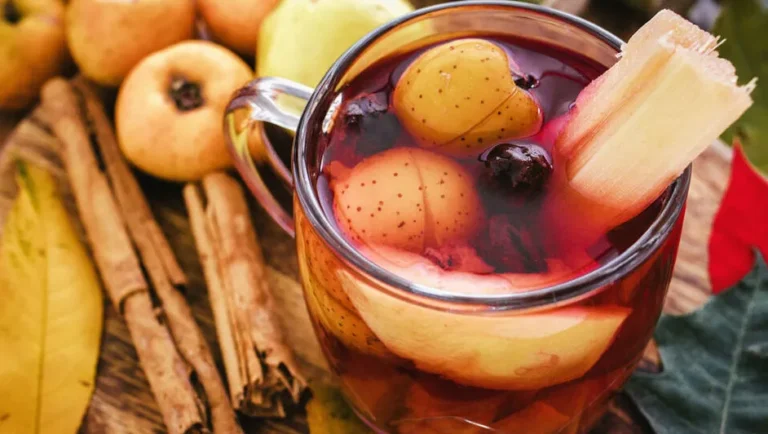
El Ponche Navideño (Christmas Punch) is a warm and comforting drink enjoyed during this season not only in Oaxaca, but throughout all of Mexico.
This hot beverage is made with a variety of fruits and ingredients such as sugar cane, apple, cinnamon, and hibiscus. In Oaxaca, you can also ask for ponche con piquete, which means your punch will include a small splash of mezcal.
Buñuelos
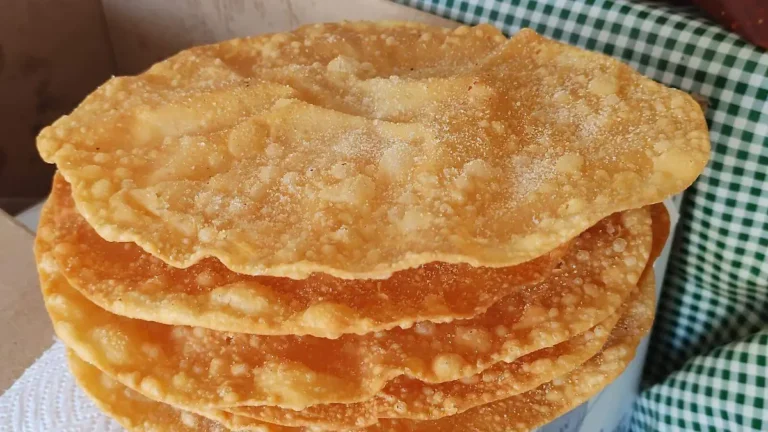
Buñuelos in Oaxaca are a beloved traditional treat enjoyed especially during the Christmas season and festive events like posadas. They’re large, crispy, golden-brown fritters made from a thin wheat-flour dough that’s stretched until almost transparent, then deep-fried until perfectly crunchy. Once cooked, they’re sprinkled with sugar or drizzled with a sweet piloncillo syrup (miel de panela) flavored with cinnamon and cloves. Their aroma instantly feels like the holidays.
How Buñelos are eatten In Oaxaca, Mexico?
Oaxaca in December weather
Oaxaca’s weather in December is very pleasant for travelers, especially for those coming from colder countries such as Canada, the USA, or the UK.
🌤️ General conditions
Mostly sunny and dry
Very low chance of rain
Clear blue skies are common
🌡️ Average temperatures
Daytime: 22–26°C / 72–79°F
Nighttime: 8–12°C / 46–54°F
Mornings and evenings can feel chilly, especially in higher areas
👕 What to pack
Light clothes for the day (t-shirts, light pants, dresses)
A sweater or light jacket for evenings
Comfortable walking shoes
Sunscreen (the sun is still strong!)
A scarf or thin coat if you get cold easily